The Quiet Science Behind GLP-1 — and Why Researchers Are Looking Past Injectable Drugs
A growing body of research is asking whether the body's own satiety hormones can be supported the way pharmaceuticals try to imitate them. The answers are more interesting than expected.

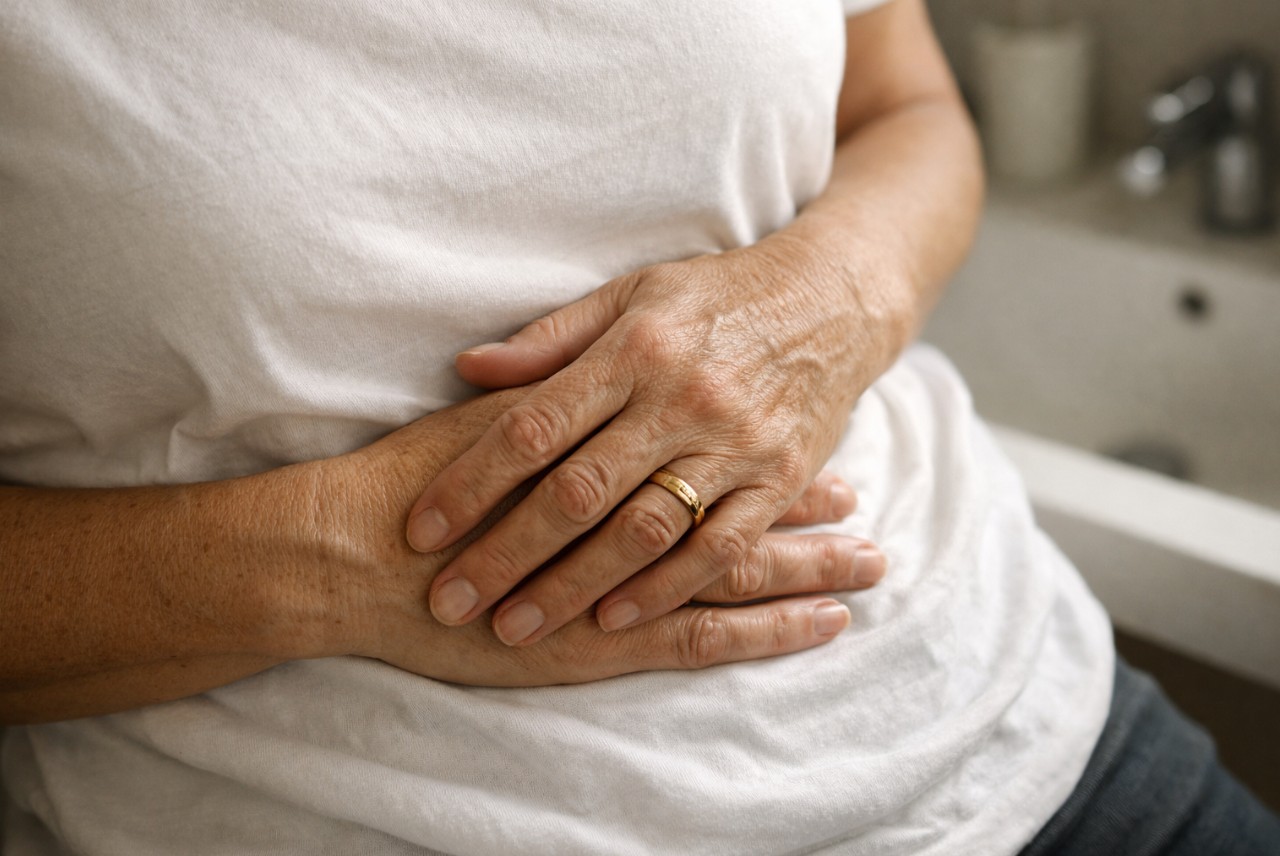
Sarah Mitchell remembers the morning it stopped feeling like aging and started feeling like something else. She was 56, a retired teacher in Asheville, and standing in her bathroom looking at a body she did not recognize. Twenty-eight pounds had appeared somewhere between her fifty-second and fifty-fifth birthdays, and most of it had gathered in a place no amount of walking, kale, or willpower seemed willing to give back.
Her doctor told her what doctors tell most women in their fifties: that this was natural, that her metabolism was slowing, that she should eat less and move more. He did not mention hormones. He did not mention that, within the past three years, an entirely new conversation had begun in metabolic research — one that has quietly reframed how we understand hunger, satiety, and middle-age weight gain.
What she stumbled into, while reading a Stanford press release a friend had forwarded her, was a question that has been turning the weight-loss field on its head: what if the body already produces its own natural version of these injectable drugs, and we have simply been ignoring it?
If you want to skip ahead to the actual formula and clinical reasoning Sarah eventually discovered, the original presentation by the formulator is here.
Watch the Full Presentation →The hormones nobody talked about
The molecule at the center of all this is called GLP-1 — short for glucagon-like peptide-1. It is a hormone the gut secretes after meals. Its job, broadly speaking, is to tell the brain that the body is full and the bloodstream that more insulin is needed. Alongside a sister hormone called GIP, it forms the body's primary satiety system. When GLP-1 is working well, hunger fades naturally between meals. When it is not, hunger never quite leaves.
For most of the twentieth century, GLP-1 was a footnote in textbooks. Then, in 2017, researchers figured out how to synthesize a stable version of it and inject it under the skin. The injectable drugs that resulted from this research would, within five years, become some of the most prescribed medications in American history. They worked, often dramatically. They also came with nausea, vomiting, occasional pancreatitis, a price tag north of fourteen thousand dollars a year, and the unpleasant detail that the moment a patient stopped injecting, most of the lost weight returned.
What received less attention was a quieter line of research running in parallel. If the synthetic versions worked by mimicking GLP-1, the obvious question was: why was the body's own GLP-1 production failing in the first place? The answer, it turned out, has to do with two things: age, and the modern food supply. Studies at Stanford, Yale, and Cambridge have established that natural GLP-1 secretion drops sharply after thirty-five, and drops further after menopause. Ultra-processed foods and chronic gut inflammation suppress it further.
The complete protocol — and the four-ingredient formula being tested in over 1,000 informal trials — is detailed in the presentation.
Watch the Full Presentation →A study, a recipe, a pattern
What happens when you turn GLP-1 back up is the question researchers have spent the last several years trying to answer. A 2018 Stanford trial, originally designed to study gastric ulcer recovery, accidentally produced a finding no one was looking for: a forty-two-year-old patient given a daily medicinal-gelatin protocol lost nine and a half pounds in four days, twenty-seven pounds in fifteen, and over ninety pounds in three months. She had not changed her diet. She had not exercised. Her bloodwork showed her GLP-1 and GIP levels had risen by more than two hundred percent.
The compounds responsible turned out to be two amino acids found in pure gelatin: glycine and proline. In subsequent studies, glycine raised GLP-1 by up to 182 percent. Proline raised GIP by 144 percent. When combined with three additional compounds — Japanese green tea extract, hydrolyzed collagen with vitamin C, and turmeric with piperine — the results documented across more than 1,000 informal trial participants have been striking enough to generate genuine attention in the field.
What Sarah found
The protocol now has a name. When Sarah Mitchell first heard about it, it was through a small article she clicked on at 11:47 on a Tuesday night, expecting nothing. The article described a daily formula being developed in California — a single morning gummy combining the four compounds. It did not promise miracles. It described, plainly, a way of supporting the body's existing satiety hormones rather than imitating them from the outside.
The original presentation by the celebrity expert who formulated the protocol is freely available below. Roughly twenty minutes long.
Watch the Full Presentation →Sarah has been on the protocol for eleven weeks. She has lost twenty-three pounds. More importantly to her, she has stopped thinking about food in the way she had begun to dread — the constant, low hum of hunger that had defined her late fifties. The change, she says, has not been dramatic in the way the diet industry has trained her to expect. It has been quieter. The hum stopped. Her clothes started fitting. The body she had stopped recognizing began to come back.
"I don't know if this works for everyone," she told me, when I called her last week. "I just know what happened to me. And I know what the science says about why it might."
For readers who want to understand the formula in detail — the four ingredients, the clinical reasoning, and the daily protocol — the original presentation is available below. Roughly twenty minutes long. Free to view.
Watch the Full PresentationSarah Mitchell is a pseudonym used at the subject's request to protect her family's privacy.